
How to Build a Sales System
Many service businesses don’t have a sales system.
They have a collection of conversations.
Enquiries arrive through referrals, networking, or the website.
The founder replies, sends a proposal, maybe follows up once or twice, and then moves on to client work.
Everything feels manageable when there are only a few opportunities.
But as soon as things get busy, problems appear.
Follow-ups are forgotten.
Warm leads disappear.
Opportunities are lost.
And money quietly goes down the drain.
The Real Problem
In many businesses, the entire sales process sits inside the founder’s head.
Follow-ups happen on instinct, not strategy.
Enquiries sit in email.
Proposals are sent but never tracked.
When someone asks how many opportunities are active, the answer is usually a guess.
Without visibility, sales becomes unpredictable.
What a Sales System Actually Is
A sales system is simply the routines you follow and the tools you use to measure and track sales.
It makes opportunities visible and ensures conversations keep moving forward.
Instead of relying on memory and good intentions, the process becomes structured and repeatable.
The Basic Structure
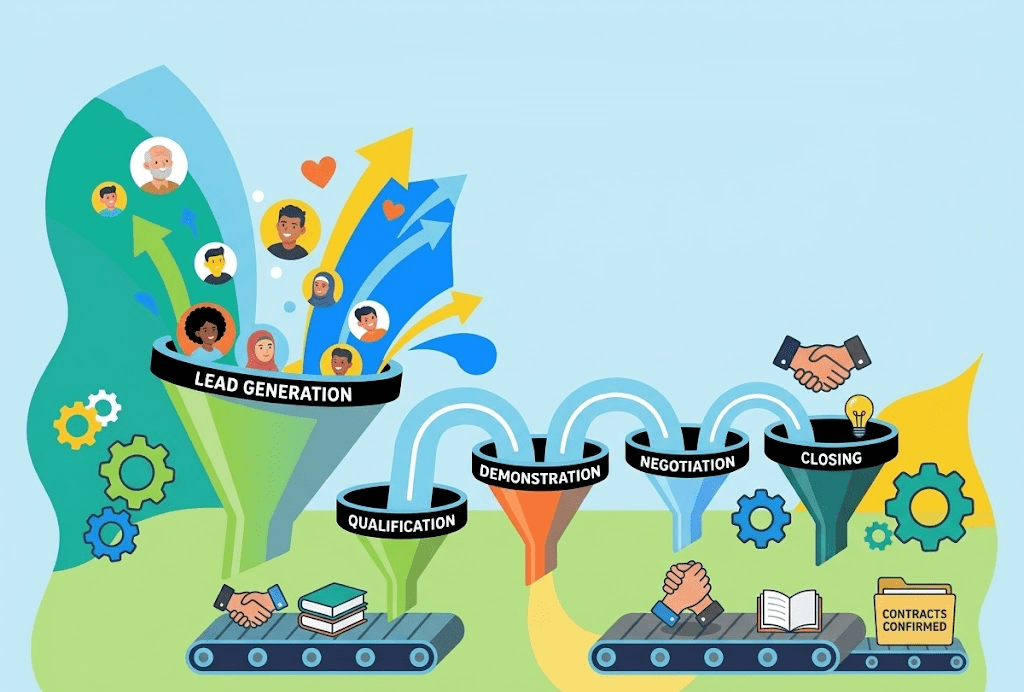
A simple sales system usually includes five elements.
- Capture every enquiry.
Every conversation and enquiry should be recorded somewhere visible. - Qualify leads early.
Not every enquiry should become a proposal. Qualifying prospects saves time and improves close rates. - Track opportunities in a pipeline.
Active leads should be visible in a simple pipeline so you know what stage each conversation has reached. - Schedule follow-ups.
Follow-ups should be planned, not remembered. - Review the pipeline daily or weekly.
A short review ensures opportunities keep moving forward.
Why This Matters
One of the most common problems I see is a warm lead simply being forgotten.
An enquiry arrives.
The founder replies.
Then delivery work takes over and the conversation fades away.
Sometimes the prospect chooses a competitor who simply followed up more consistently.
Without a system, opportunities quietly slip away.
The Habit That Changes Everything
The biggest improvement usually comes from visibility into active leads.
When founders can clearly see:
- how many opportunities exist
- where each conversation sits
- which follow-ups are due
Sales stops feeling chaotic.
Instead of relying on memory, the business can manage its pipeline properly.
Next Step
Sales systems don’t need to be complicated.
Most founders can dramatically improve their results simply by making their opportunities visible and reviewing them regularly. Even a Google Sheet is better than no system, although for teams, the online systems can be much more comprehensive.
The Growth Challenge helps founders build the habits that keep sales and marketing moving forward each week. Come and join our Growth Challenge community for free.